
How Understanding Keyword Intent Elevates Your SEO Strategy
What Is Keyword Intent?
Keyword intent, also known as search intent, refers to the reason behind a user’s search query — what they want to achieve when typing specific words into a search engine. It reveals whether the user is looking for information, making a purchase, comparing options, or navigating to a specific site.
Recognizing keyword intent is one of the most powerful aspects of SEO because it enables you to create content that directly matches user expectations. When your content satisfies search intent, it not only improves engagement but also strengthens your rankings and increases conversions.
Why Understanding Keyword Intent Matters for SEO
Grasping keyword intent allows you to align your SEO and content strategy with what your audience truly wants. Instead of guessing what users need, you can craft content that delivers the exact information, product, or service they’re searching for.
When your content aligns with intent:
Your rankings improve, because search engines reward relevance.
User engagement increases, as visitors find your content valuable.
Conversions rise, since you meet users at the right stage of their journey.
For example, if someone searches “how to start a blog,” their intent is informational — they want guidance, not a paid service. But if they search “best blog hosting services,” that’s a commercial or transactional intent — meaning they’re ready to buy or compare. Matching your content to these intents ensures you attract the right audience at the right time.
Types of Keyword Intent in SEO
Understanding the four main types of keyword intent helps you tailor content for every stage of the buyer’s journey.
1. Informational Intent
Users are searching for knowledge or answers to questions.
Examples:
“What is SEO?”
“How does keyword research work?”
“Tips for writing blog content.”
Best Content Types:
Blog posts
Guides and tutorials
How-to articles
Goal: Educate and build trust with your audience.
2. Navigational Intent
Users already know the brand or website they want to visit.
Examples:
“YouTube login”
“Moz keyword tool”
“SkillUp Freelance SEO blog”
Best Content Types:
Optimized landing pages
Clear site navigation
Brand and product pages
Goal: Ensure your brand or website is easily discoverable when users search directly for it.
3. Commercial Intent
Users are researching products or services before making a purchase. They’re comparing options, reading reviews, and evaluating features.
Examples:
“Best SEO tools for beginners”
“Top WordPress hosting 2025”
“Affordable web design services USA”
Best Content Types:
Product comparisons
Review articles
Case studies and buying guides
Goal: Persuade users and position your brand as a trustworthy solution provider.
4. Transactional Intent
Users are ready to take action — such as making a purchase, subscribing, or signing up.
Examples:
“Buy SEO course online”
“Hire SEO expert in California”
“Download keyword research tool”
Best Content Types:
Product pages
Sales landing pages
Service sign-up forms
Goal: Convert intent-driven visitors into paying customers or subscribers.
Case Study: How Targeting Keyword Intent Increased Traffic
A finance-focused blog initially published broad, generic topics like “budgeting tips” and “saving money.” Despite regular updates, their organic traffic plateaued.
After researching keyword intent, they discovered users were frequently searching for “best budgeting apps 2024.” Recognizing this as a commercial intent keyword, they created a detailed article comparing the top budgeting apps with features, pros, and cons.
Within three months, the post ranked in Google’s top 3 results and boosted their traffic by 150%. This success highlights how aligning content with keyword intent can dramatically improve visibility, engagement, and conversions.
The Main Types of Keyword Intent
Understanding the main types of keyword research intent—transactional, informational, navigational, and commercial—allows businesses to create targeted content that resonates with their audience. Each type serves a unique purpose in the user’s journey and requires different approaches in content creation.
1. Transactional Keywords
Definition and Examples
Transactional keywords indicate that a user is ready to make a purchase or complete a specific action. These keywords often include terms like “buy,” “discount,” “for sale,” or “order.” For example, “buy running shoes online” clearly shows the user’s intent to make a purchase.
How to Find Transactional Keywords Using Google Keyword Planner
Google Keyword Planner is a free tool provided by Google Ads, primarily for advertisers, but it’s also a powerful resource for finding transactional keywords that indicate purchase intent. These keywords often include action verbs like “buy,” “order,” “discount,” “deal,” or “near me.” Below, we’ll walk through a step-by-step practical example of using Google Keyword Planner effectively to find transactional keywords.
Step 1: Access Google Keyword Planner
- Go to Google Ads and log in with your Google account.
- Navigate to Tools & Settings > Keyword Planner.
- Select “Discover New Keywords.”
Step 2: Enter Product or Service Keywords
In the keyword search field, enter a product or service. Let’s assume you are selling wireless headphones. Type:
- “wireless headphones”
- “Bluetooth headphones”
You can enter multiple keywords to get broader results.
Step 3: Filter for Transactional Keywords
Once the keyword suggestions load, follow these steps to narrow down the results to transactional keywords:
- Apply the Competition Filter: Set it to “High”—this helps you see keywords where advertisers are actively bidding, which indicates they have transactional intent.
- Focus on Bidding Data: Look at the Top-of-Page Bid (High Range) column. Keywords with higher bids indicate that businesses are willing to pay more, signaling high intent to convert users.
- Add Intent Keywords: Use the “Include Keywords” filter, and type in words like:
- buy
- order
- deal
- discount: This narrows the list to transactional phrases only.
Step 4: Analyze the Results
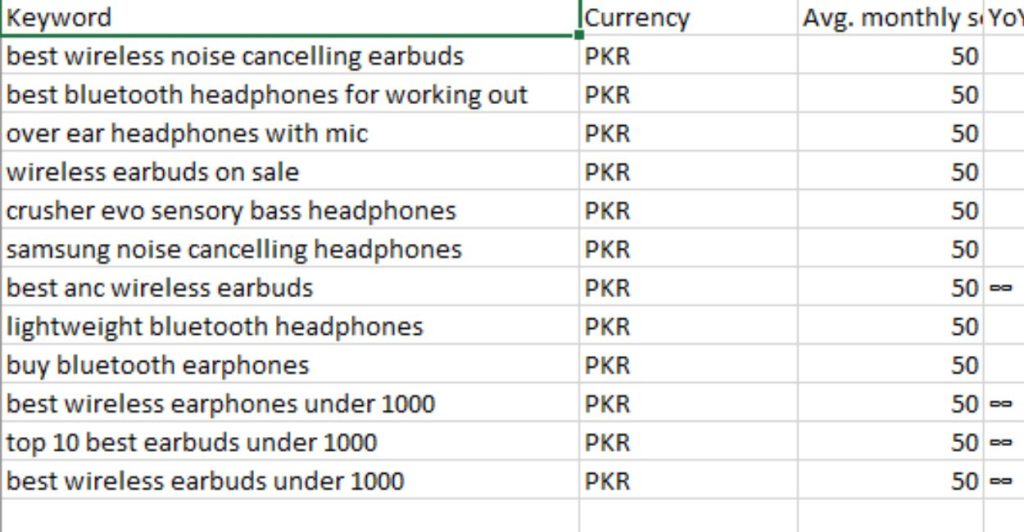
After filtering, you will get results such as:
- “lightweight bluetooth headphones” – High search volume and high bids
- “discount Bluetooth headphones” – Low competition but high purchase intent
- “wireless headphones near me” – Local transactional intent
- “best wireless headphones deals” – A mix of transactional and commercial intent
These keywords show clear intent to purchase, making them ideal for product pages or PPC campaigns.
Step 5: Practical Use of Keywords
- Product Pages: Use keywords like “lightweight bluetooth headphones” in your product titles and descriptions.
- Landing Pages: Create landing pages targeting deals with keywords like “discount Bluetooth headphones.”
- PPC Campaigns: Use high-bid transactional keywords in your Google Ads campaigns to attract buyers with purchase intent.
- Local SEO: Optimize local landing pages with keywords like “wireless headphones near me” to capture local customers ready to buy.
Bonus Tips for Using Google Keyword Planner Effectively
- Use Location Filters:
If you’re targeting a specific region, apply location-based filters to
find transactional keywords relevant to that area. - Analyze Search Trends: Use the Search Volume Trends graph in Keyword
Planner to identify seasonal keywords that perform better during certain
periods (e.g., “best Black Friday deals on headphones”). - Expand Keyword Ideas:
Click on “Keyword Suggestions” to find related transactional
keywords, expanding your list for better SEO and ad targeting.
Summary
Using Google Keyword Planner effectively allows you to find transactional keywords by focusing on high competition, bidding data, and keyword research with purchase intent. For example, filtering with action words like “buy” and “discount” reveals phrases such as “buy wireless headphones” and “discount Bluetooth headphones.” These keywords are perfect for product pages, PPC ads, and landing pages, ensuring your SEO strategy aligns with user intent to maximize conversions.
2. Informational Keywords
Definition and Examples
Informational keywords are employed when users seek answers to specific questions or wish to gain knowledge about a particular subject. Examples include phrases like “how to start a blog” or “what is digital marketing.” These indicate that users are in the research phase.
How to Find Informational Keywords Using Google Keyword Planner
Google Keyword Planner is a free tool that provides valuable keyword data. Here’s a step-by-step guide to help you identify informational keywords effectively.
Step 1: Access Google Keyword Planner
- Go to Google Keyword Planner.
- Sign in with your Google account. You don’t need to run ads; just create an account if you don’t have one.
- Select Discover New Keywords.
Step 2: Enter a Broad Keyword
- In the Search bar, type a broad topic relevant to your niche. For example, if you’re looking for informational keywords about SEO, type “SEO basics” or “SEO guide.”
- Click Get Results to generate keyword ideas.
Step 3: Analyze the Results
When the results load, you’ll see a table with keyword suggestions along with key metrics such as:
- Search Volume: Represents the average number of times the keyword is searched each month.
- Competition: A low to high scale indicating how many advertisers are targeting the keyword.
- Top of Page Bid (Low/High): Cost per click estimates if the keyword were used in ads.
Step 4: Identify Informational Keywords
Look for keywords that reflect informational intent—queries where users are seeking knowledge rather than looking to buy. Some common indicators of informational keywords include words like:
- What, How, Guide, Tutorial, Tips, Best, Benefits, Examples.
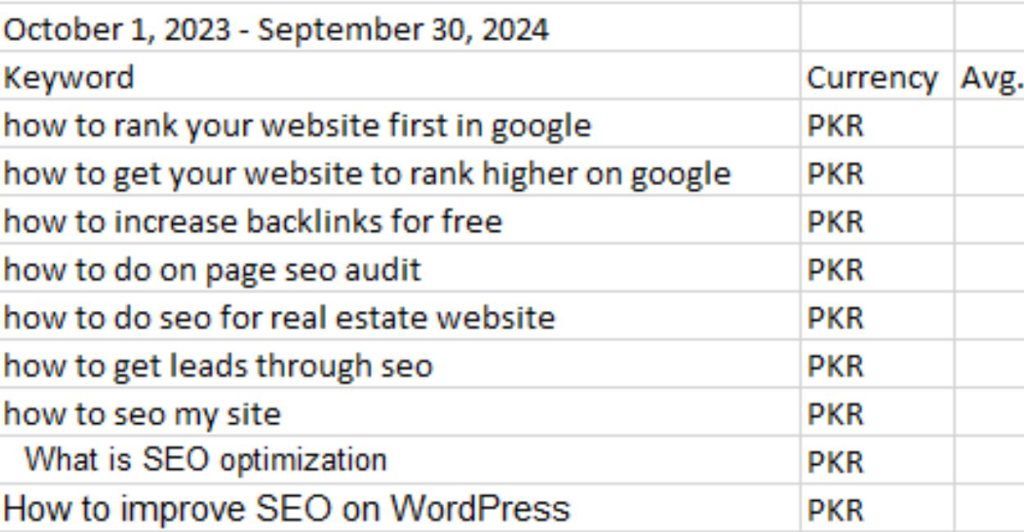
Example Result:
- “How to improve SEO on WordPress”
- “What is SEO optimization?”
These keywords indicate users are seeking educational content, making them ideal for blog posts, guides, or explainer videos.
Step 5: Filter for Relevant Keywords
- Utilize the filters at the top to narrow down your results:
- Competition: Choose Low or Medium to focus on less competitive keywords.
- Keyword Text: Include words like “how” or “what” to narrow down to informational queries.
- Sort by Search Volume to find high-traffic keywords that align with informational intent.
Step 6: Export the Data
- Click on Download Keyword Ideas in the upper-right corner to export the keyword data in a CSV file.
Use the exported data to plan content—blog articles, tutorials, or FAQs—based on the most relevant informational keywords.
Example: How to Use an Informational Keyword in Content
Let’s say you found “How to improve SEO on WordPress” in your results. You can write a detailed blog post explaining step-by-step strategies like:
- Installing SEO plugins (e.g., Yoast or RankMath)
- Optimizing page titles and meta descriptions
- Creating XML sitemaps for better indexing
Incorporate other related keywords from the tool within your content to strengthen your SEO efforts.
Step 7: Monitor Keyword Performance
Once you’ve created content, use Google Analytics or Google Search Console to track the performance of your chosen keywords. Look for metrics such as click-through rates (CTR) and ranking improvements.
3. Navigational Keywords
Definition and Examples
Navigational keywords are used when users intend to visit a specific website or page. For example, searching “Facebook login” indicates that the user wants to go directly to Facebook’s login page.
How to Find Navigational Keywords Using Site Search Queries
To identify navigational keywords, follow these simple steps using an example website, IKEA.com:
Check Internal Search Data:
- Where to Look: Log into your website analytics, like Google Analytics. Go to the Behavior section and select Site Search > Search Terms.
- What to Find: Look for the most common search terms users type into IKEA.com.
Identify Common Searches:
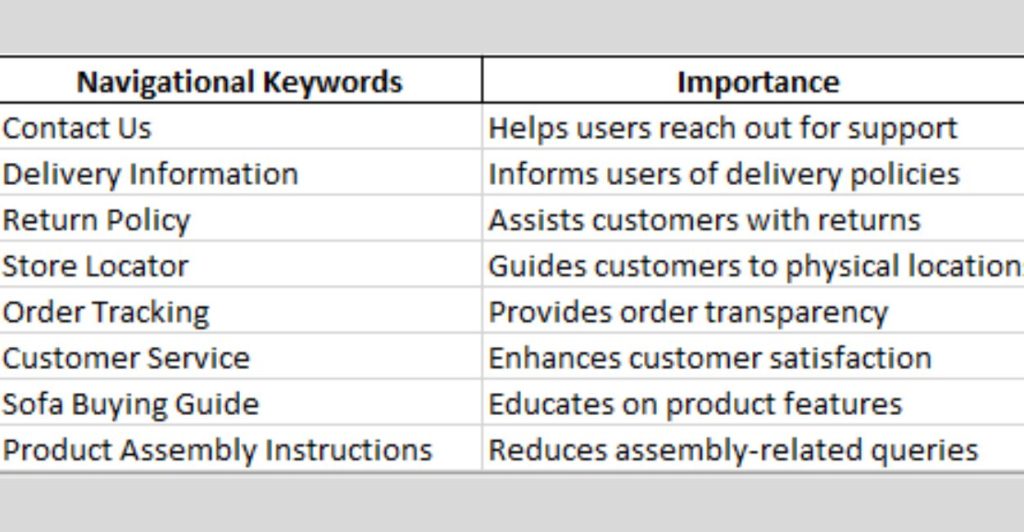
- Examples: If users frequently search for “Contact Us,” “Delivery Information,” or “Return Policy,” these are your navigational keywords. They indicate specific pages users are trying to access.
Optimize Navigation:
- Make it Easier: If “Contact Us” is a top search, ensure that this page is easy to find in the main menu. For “Delivery Information,” consider adding a prominent link on the homepage.
- Create Relevant Content: If many users search for “Return Policy,” develop a detailed returns page and link it in multiple places.
Monitor Ongoing Searches:
- Stay Updated: Regularly check IKEA.com’s site search queries to see if new trends emerge. Adjust the navigation as needed to match user behavior.
Quick Example:
For IKEA.com, if the top searches are “Sofa Buying Guide” and “Order Tracking,” you should:
- Create a page for Sofa Buying Guide featuring tips and product recommendations.
- Make the Order Tracking link easy to find in the site’s navigation.
Content Types for Navigational Keywords
Content for navigational keywords should include:
- Homepage Optimization: Ensure your homepage effectively conveys your brand message and directs users to the desired actions.
- Brand Pages: Create dedicated pages for your brand that provide all relevant information.
4. Commercial Keywords
Definition and Examples
Commercial keywords are used by potential buyers who are comparing products or services before making a purchase. These keywords often include phrases like “best laptops for students” or “top-rated smartphones.” They indicate that the user is in the consideration phase of the buying process.
How to Find Commercial Keywords
Review Competitor Content
Analyzing your competitors is a great way to uncover commercial keywords that can drive traffic to your website. Here’s how to do it:
- Determine Your Competitors: Start by pinpointing the key players in your industry. For example, if you’re involved in the furniture sector, notable competitors could include websites such as IKEA, Wayfair, and Ashley HomeStore.
- Analyze Their Content: Visit your competitors’ websites and look for product pages, landing pages, and blog posts. Pay attention to the keywords they are using in their titles, headings, meta descriptions, and throughout the content.
Example: If you analyze IKEA’s website, you might find keywords like:
- “Buy sofas online”
- “Best dining room sets”
- “Affordable bedroom furniture”
These phrases indicate strong commercial intent, as users searching for these terms are likely ready to make a purchase.
- Check Their Top Pages: Use tools like BuzzSumo to see which pages from your competitors are getting the most engagement. Focus on pages that rank highly for product-related searches, as they are likely optimized for commercial keywords.
Use Keyword Research Tools
SEMrush:
SEMrush is a powerful tool that can help you discover commercial keywords that drive traffic to your competitors websites. Here’s a step-by-step guide:
- Log into SEMrush: If you don’t have an account, you can sign up for a free trial to explore the features.
- Enter a Competitor’s Domain: In the SEMrush dashboard, enter a competitor’s domain in the search bar. For example, you can use IKEA.com.
- Analyze the Domain Overview: Click on the “Domain Overview” tab. This will give you a snapshot of the domain’s organic search traffic, keywords, and position distribution.
- Navigate to the “Organic Research” Section: Click on the “Organic Research” tab in the left sidebar. Here, you will find valuable data about the keywords your competitor ranks for.
- Filter by Intent: Use filters to focus specifically on commercial intent keywords. You can look for keywords that include terms like “buy,” “best,” “top,” “discount,” or “sale.” For example, search for keywords like:
- “Buy kitchen furniture online”
- “Best office chairs for home”
- Export the Data: You can export the keyword list to analyze them further. This will help you identify which commercial keywords are driving traffic to your competitor.
Example: After analyzing IKEA’s keywords through SEMrush, you might discover that they rank for:
- “Discount sofa bed”
- “Luxury dining table”
- “Office furniture sale”
These keywords are commercial in nature, indicating users are in the buying phase.
Conclusion
Finding commercial keywords involves both analyzing competitor content and leveraging powerful keyword research tools like SEMrush. By combining insights from both methods, you can develop a strong list of commercial keywords that can enhance your SEO strategy and attract customers ready to make a purchase. If you want to get the information about short-tail and long-tail-keywords in SEO read this.
| Keyword | Intent |
|---|---|
| Buy IKEA furniture | Commercial |
| IKEA kitchen deals | Commercial |
| IKEA sofa sales | Commercial |
| IKEA home decor | Commercial |
| IKEA bedroom furniture | Commercial |
| IKEA office furniture | Commercial |
| IKEA outdoor furniture | Commercial |
| IKEA furniture assembly services | Commercial |
Content Types for Commercial Keywords
When creating content for commercial keywords, focus on:
- Comparison Articles: Write in-depth comparisons between products to help users make informed decisions.
- Product Reviews: Provide comprehensive reviews that highlight features, pros, and cons.
- Buyer’s Guides: Create guides that help users choose the best product for their needs.
Transactional vs. Informational vs. Commercial – What Should You Care About?
Understanding the differences between transactional, informational, and commercial keywords is crucial for your SEO strategy. Each keyword type fulfills distinct user intents:
- Transactional Keywords: Drive immediate purchases and conversions.
- Informational Keywords: Attract users seeking knowledge, allowing you to build authority and trust.
- Commercial Keywords: Guide users who are in the research phase, helping them move closer to a purchase.
Implications for SEO Strategies and Conversion Rates
Focusing on the right keywords can significantly impact your SEO performance. For example, optimizing content for transactional keywords can directly lead to increased sales. In contrast, informational content can build brand awareness and authority, creating a foundation for future conversions.
Combining Keyword Types in SEO
Why Is Search Intent Important for SEO?
Search intent is critical for creating a comprehensive SEO strategy. Different types of keywords fulfill varying user intents, and recognizing this can help businesses tailor their content accordingly. For example, an e-commerce site may want to optimize for transactional keywords to drive sales while also producing informational content to attract new visitors.
How to Use Each Keyword Type Effectively
To effectively use each keyword type in your SEO efforts:
- Integrate Transactional Keywords: Focus on CTAs that encourage users to make a purchase.
- Leverage Informational Keywords: Use these to drive traffic and establish expertise in your niche.
- Utilize Commercial Keywords: Create content that aids users in their decision-making process..
Optimizing Content for Search Intent
To optimize content for navigational intent:
- Ensure Clear Branding: Your brand name should be prominent across your website.
- Simplify Navigation: Create intuitive menus that lead users to key pages quickly.
Optimizing for Informational Intent
Best practices for optimizing content for informational intent include:
- Use Clear Headings: Make content skimmable by using H2 and H3 headings.
- Answer Questions Directly: Address common questions within your content.
Optimizing for Transactional Intent
To optimize for transactional intent:
- Prominent CTAs: Ensure that CTAs are visible and encourage users to take action.
- Trust Signals: Include reviews and testimonials to build credibility.
Optimizing for Commercial Investigation Intent
Best practices include:
- Comparison Charts: Create charts that clearly show product differences.
- Create Captivating Content: Incorporate dynamic formats such as videos and infographics to capture attention.
| Search Intent | Optimization Strategies |
|---|---|
| Navigational Intent |
|
| Informational Intent |
|
| Transactional Intent |
|
| Commercial Investigation Intent |
|
Improving Existing Content Based on Keyword Intent
Evaluating Existing Content for Keyword Intent Alignment
To improve existing content:
- Audit Current Content: Assess whether it aligns with the current keyword intent.
- Update Keywords: Refresh outdated keywords with more relevant ones that align with user intent.
- Revise Content: Enhance content to better address user needs.
Case Study: Updating Content for Better Alignment
A travel blog previously focused solely on general travel tips. After evaluating their content, they identified opportunities to incorporate more transactional keywords related to travel booking. By updating their posts to include specific calls to action, like “book your flight now,” they increased their conversion rate by 40%.
Optimizing for User Experience to Align with Search Intent
Importance of User Experience (UX) in SEO
User experience is a critical factor that influences how search engines rank your content. A well-optimized UX not only helps retain visitors but also encourages them to engage with your site, ultimately improving conversion rates. Key elements of UX to consider include:
- Page Load Speed: A slow-loading website can deter users, leading to high bounce rates. Tools like Google PageSpeed Insights can help you identify areas for improvement.
- Mobile Responsiveness: With an increasing number of users accessing websites via mobile devices, ensuring your site is mobile-friendly is essential. This means using responsive design, optimizing images, and ensuring that buttons and links are easily clickable.
- Clear Navigation: A well-organized website with intuitive navigation allows users to find the information they need quickly. Use breadcrumb navigation and clear categories to guide users through your site.
- Engaging Content Layout: Break up text with headings, bullet points, and images to make your content more digestible. Engaging content is more likely to keep users on your site longer.
Case Study: UX Improvements Leading to Higher Engagement
A leading e-commerce site struggled with high bounce rates and low conversion rates. After a thorough UX audit, they implemented several changes, including improving page load speed, optimizing the mobile experience, and simplifying their checkout process. As a result, they saw a 60% decrease in bounce rates and a 30% increase in conversions within six months. This case illustrates how UX enhancements can align with keyword intent to create a more satisfying user experience, ultimately driving better SEO performance.
Importance of Regular SEO Audits
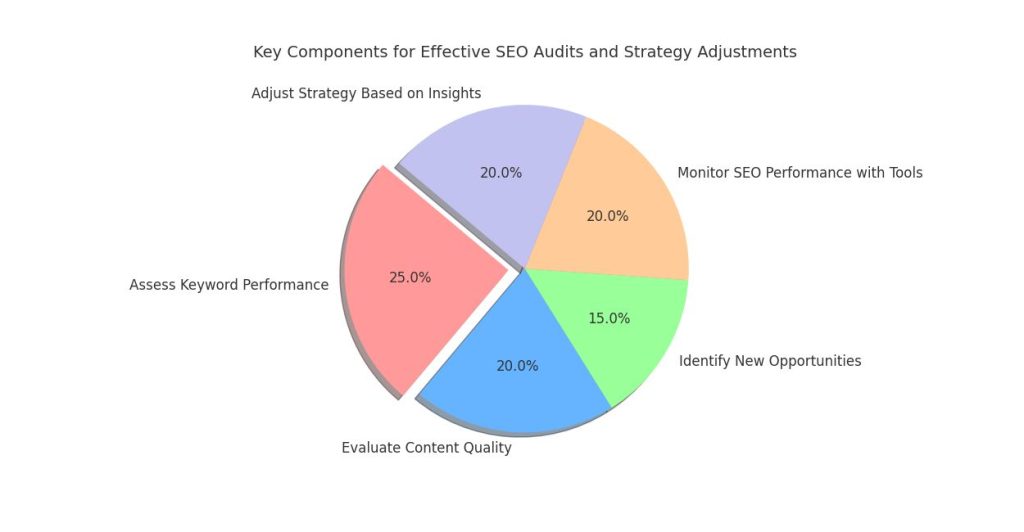
SEO is not a one-time task; it requires ongoing monitoring and adjustments. Regular audits help you evaluate the effectiveness of your strategies and ensure that your content remains aligned with user intent. Consider conducting audits every few months to:
- Assess Keyword Performance: Analyze which keywords are driving traffic and which are underperforming.
- Evaluate Content Quality: Ensure your content remains relevant and valuable to your audience.
- Identify New Opportunities: Keep an eye on emerging trends and keywords to stay ahead of the competition.
Tools for Monitoring SEO Performance
Utilize tools like Google Analytics and SEMrush to track your website’s performance. Google Analytics provides insights into user behavior, helping you understand which pages are most popular and where users drop off. SEMrush allows you to monitor keyword rankings, backlink profiles, and overall site health.
Adjusting Your Strategy Based on Insights
Use the insights gained from your audits to refine your SEO strategy. For example, if you notice that certain informational articles are driving significant traffic, consider expanding them into comprehensive guides or creating related content to capitalize on that interest.
Conclusion
Understanding keyword intent—transactional, informational, navigational, and commercial—is essential for creating an effective SEO strategy. By aligning your content with the specific needs and motivations of your audience, you can improve your website’s visibility, engagement, and conversion rates.
As you develop your SEO strategy, consider the following key takeaways:
- Focus on User Intent: Always prioritize understanding what your users are looking for and tailor your content to meet those needs.
- Utilize Keyword Research Tools: Leverage tools like Google Keyword Planner and SEMrush to uncover valuable keyword opportunities.
- Regularly Optimize Content: Continually evaluate and refine your content to ensure it remains relevant and effective in fulfilling user intent.
- Enhance User Experience: Prioritize UX to keep visitors engaged and encourage conversions.
- Monitor and Adapt: Regular audits and adjustments to your strategy will help you stay ahead of the competition and maximize your SEO efforts.
By taking these steps, you’ll be well on your way to creating a robust SEO strategy that effectively leverages keyword intent to drive success.
Final Thoughts
Understanding keyword intent is not just about improving your SEO rankings; it’s about creating a better experience for your users. By focusing on the different types of keyword intent and adjusting your strategy accordingly, you can drive more traffic, increase engagement, and ultimately achieve your business goals.
This approach requires continuous learning and adaptation. If you want to know the more SEO ranking factor read this.
Frequently Asked Questions (FAQs)
1. What Are the Key Factors for SEO Success When Understanding Keyword Intent?
To achieve SEO success, understanding keyword intent is crucial. Focus on these core factors:
Identify User Intent: Know whether users want information, products, or specific sites.
Segment Keywords: Categorize keywords into informational, navigational, transactional, and commercial.
Use SEO Tools: Tools like Google Keyword Planner and SEMrush reveal keyword intent and competition.
Optimize Accordingly: Tailor content to match intent—informative for queries, persuasive for purchases.
Measure & Refine: Regularly track how each keyword type performs and adjust content to improve results.
2. What Is Keyword Intent in SEO?
Keyword intent (or search intent) describes the purpose behind a user’s search query. It helps determine what users truly want—knowledge, a product, or a specific website. Understanding this helps create content that satisfies users’ needs and improves search visibility.
3. What Are Informational Keywords, and Why Are They Important?
Informational keywords are terms used by users seeking answers, guides, or explanations (e.g., “how to improve website speed”).
They’re important because they:
Drive organic traffic from users in the awareness stage.
Help build brand authority through educational content.
Support long-term visibility in search results.
4. How Do Informational and Transactional Keywords Differ?
Informational keywords target users looking for knowledge, while transactional keywords focus on users ready to take action—like making a purchase or signing up.
Example:
Informational: “how to choose running shoes”
Transactional: “buy Nike running shoes online”
5. What Are Navigational Keywords, and How Do They Impact SEO?
Navigational keywords are used by people looking for a specific website or brand, like “YouTube login” or “Amazon Prime deals.”
Optimizing for these helps:
Improve visibility for branded searches.
Strengthen your brand’s online presence.
Guide users directly to the correct page, improving site navigation.
6. What Are Commercial Keywords, and When Should They Be Used?
Commercial keywords indicate that a user is comparing options before buying. These typically include terms like “best,” “top,” or “reviews.”
They’re best used in:
Product reviews and comparison pages.
Buying guides.
Affiliate content.
They attract users who are close to making a purchase decision.
7. How Can Understanding Keyword Intent Improve Content Strategy?
By identifying what users are searching for and why, you can:
Create content that directly answers their intent.
Increase engagement and reduce bounce rates.
Guide users smoothly through the buyer’s journey—from awareness to purchase.
8. Can Keyword Intent Affect Conversion Rates?
Yes. When content matches user intent, visitors are more likely to stay longer, trust your brand, and take action. For example, transactional content with clear calls-to-action converts better than generic pages.
9. What Tools Help Identify Keyword Intent Effectively?
Popular tools for analyzing keyword intent include:
Google Keyword Planner – for search volume and trends.
Ahrefs / SEMrush – for keyword difficulty and intent grouping.
AnswerThePublic – for discovering question-based informational keywords.
10. How Do Navigational Keywords Improve User Experience?
When your website ranks for navigational keywords (like your brand name or services), users can easily find what they’re looking for. This builds trust, enhances site navigation, and improves overall satisfaction.
11. Why Is Balancing Keyword Types Important for SEO?
A well-balanced SEO strategy includes all four types of keywords:
Informational for awareness and authority.
Navigational for brand trust.
Commercial for consideration and comparison.
Transactional for conversions.
Balancing them ensures your website attracts traffic from every stage of the customer journey.