
Short-Tail vs. Long-Tail Keywords in SEO: Understanding the Key Differences
In the ever-changing world of Search Engine Optimization (SEO), understanding how different types of keywords work is essential for driving the right kind of traffic to your website. Keywords serve as the bridge between what users search for and the content your website offers.
Among the many types of keywords, two major categories stand out — short-tail and long-tail keywords. Both play important but different roles in your SEO strategy. This guide explains the difference between the two, their advantages, and how to use them effectively to improve your website’s visibility and conversions.
What Are Short-Tail Keywords?
Short-tail keywords, also known as head terms, usually contain one to three words. These keywords are broad, general, and tend to have very high search volumes. Examples include “shoes,” “SEO,” or “digital marketing.”
Because they target wide topics, short-tail keywords attract a large number of searches — but also come with high competition. Ranking for them can be difficult, especially for newer or smaller websites.
Key Characteristics of Short-Tail Keywords
High Search Volume
Short-tail keywords receive thousands of monthly searches. For example, the word “shoes” might be searched tens of thousands of times every month.Broad Search Intent
The meaning behind these searches is often unclear. Someone searching for “SEO” might want tutorials, tools, or services — making it harder to create content that perfectly matches their intent.High Competition
Because these terms are so popular, many established websites and brands target them, which makes it challenging to rank well.Lower Conversion Rates
Since searchers may not have a specific goal, the chances of converting them into customers are often lower compared to more specific searches.
Example of Short-Tail Keywords in Action
Imagine a clothing brand optimizing for the keyword “clothes.” While this might bring in a lot of traffic, most of those visitors might not find what they’re looking for and leave quickly.
Now, if the same store targets a more specific keyword like “men’s athletic shoes,” it attracts visitors who are ready to buy — proving why short-tail keywords bring awareness but not necessarily conversions.
What Are Long-Tail Keywords?
Long-tail keywords are longer and more specific keyword phrases, typically containing three or more words. These keywords are designed to capture highly targeted search intent, such as “best running shoes for flat feet” or “how to optimize SEO for small businesses.”
While long-tail keywords receive fewer searches than short-tail ones, they are extremely valuable because they bring in qualified traffic — users who already know what they want.
Key Characteristics of Long-Tail Keywords
Lower Search Volume
Long-tail keywords have fewer searches per month, but they attract visitors with specific needs, often resulting in higher engagement.Clear Search Intent
Users searching with long-tail keywords are usually looking for something specific, such as a product, solution, or detailed information.Low Competition
Fewer websites target long-tail keywords, making it easier for small or new sites to rank on the first page of Google.Higher Conversion Rates
Visitors using long-tail keywords are often closer to making a decision — whether that’s buying a product, booking a service, or signing up — resulting in more conversions.
Example of Long-Tail Keywords in Action
Returning to our clothing store example, targeting the keyword “best running shoes for flat feet” will attract a smaller but highly focused audience actively searching for that exact product.
These visitors are more likely to make a purchase than someone who simply searched for “shoes.” This demonstrates how long-tail keywords lead to higher conversion rates and a more loyal customer base.
| Short-Tail Keywords | Long-Tail Keywords |
|---|---|
| Shoes | Best running shoes for flat feet |
| SEO | How to optimize SEO for small businesses |
| Digital marketing | Affordable digital marketing strategies for startups |
| Furniture | Modern wooden dining tables for small spaces |
| Travel | Best travel destinations for families in 2024 |
Short-Tail Keywords: Advantages and Disadvantages
Advantages of Short-Tail Keywords
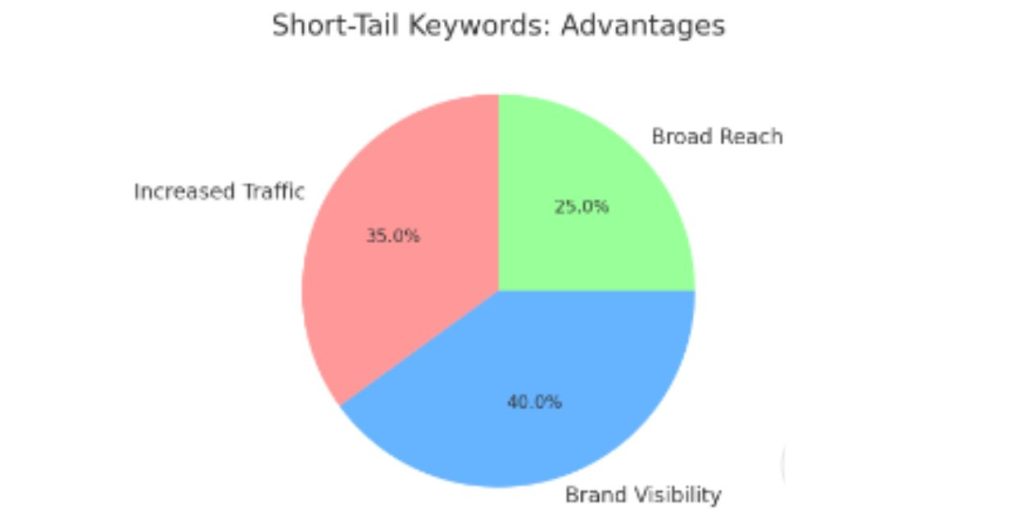
- Increased Traffic Potential: Short-tail keywords generally have higher search volumes, resulting in a larger potential audience. This can significantly increase website traffic.
- Brand Visibility: Ranking for short-tail keywords can enhance brand recognition, especially if your website appears on the first page of search results.
- Broad Reach: These keywords allow businesses to reach a wider audience, which can be beneficial for brand awareness and establishing authority in a particular industry.
Disadvantages of Short-Tail Keywords
- High Competition: The popularity of short-tail keywords means that many websites are vying for the same traffic, making it difficult for new sites to rank.
- Vague Intent: The broad nature of short-tail keywords often means that the user intent is unclear, leading to lower engagement and conversion rates.
- Higher Bounce Rates: Users may leave the site quickly if they do not find relevant content, resulting in high bounce rates that can negatively impact SEO performance.
How to Use Both Types Effectively
An effective SEO strategy uses a mix of short-tail and long-tail keywords.
Use short-tail keywords to build general visibility and attract a broad audience.
Use long-tail keywords to target specific queries, attract ready-to-convert visitors, and build trust with niche audiences.
For example, if your short-tail keyword is “SEO,” your related long-tail keywords could include “best SEO tools for beginners” or “how to improve SEO rankings quickly.” Combining both helps you build topical authority while capturing both volume and intent.
Long-Tail Keywords: Advantages and Disadvantages
Advantages of Long-Tail Keywords
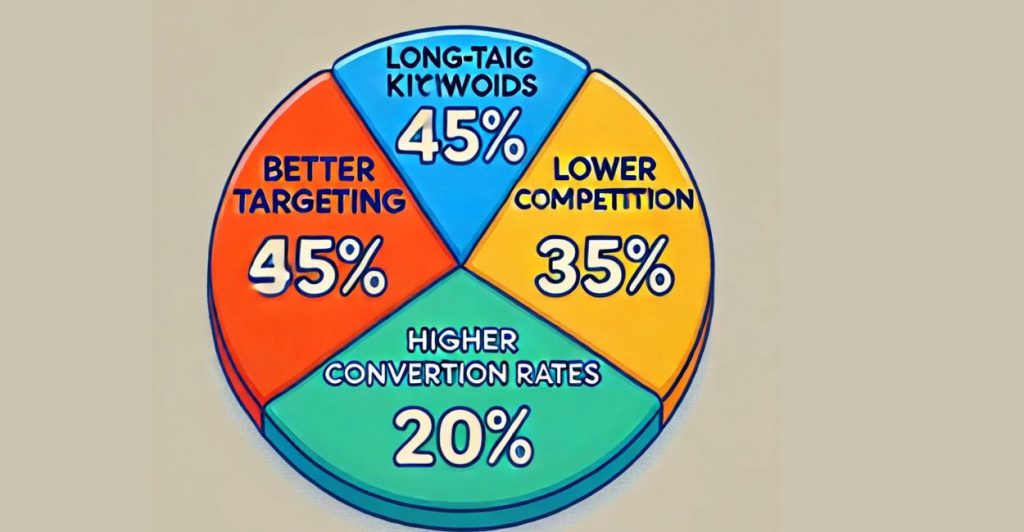
- Higher Conversion Rates: Because long-tail keywords are specific, users searching for these terms are often further along in the buying process, resulting in higher conversion rates.
- Lower Competition: Long-tail keywords face less competition, making it easier for smaller websites to rank higher in search results.
- Better Targeting: These keywords allow businesses to target a specific audience segment, resulting in more relevant traffic.
Disadvantages of Long-Tail Keywords
- Lower Search Volume: While more targeted, long-tail keywords generally attract fewer searches, which can limit overall traffic.
- Niche Focus: Focusing solely on long-tail keywords can restrict brand visibility if short-tail keywords are not also considered.
- Need for Extensive Content: Creating high-quality, relevant content around long-tail keywords often requires more effort and resources to ensure comprehensive coverage of the topic.
Balancing Short-Tail and Long-Tail Keywords in Your Strategy
Finding the right balance between short-tail and long-tail keywords is essential for a successful SEO strategy. Here are some strategies to effectively integrate both types of keywords:
1. Conduct Thorough Keyword Research
Start by performing comprehensive keyword research to identify a range of relevant short-tail and long-tail keywords for your niche. Utilize the keyword research tools mentioned earlier to gather data on search volume, competition, and user intent.
2. Create a Keyword Map
Organize your identified keywords into a keyword map, categorizing them based on short-tail and long-tail terms. This will help you visualize how to incorporate both types of keywords into your content strategy.
3. Develop Content Targeting Both Keyword Types
Create content that targets both short-tail and long-tail keywords. For instance, if your primary keyword is “digital marketing,” you could create blog posts targeting long-tail keywords like “digital marketing strategies for small businesses.” This approach allows you to attract a broad audience while also catering to specific user needs.
4. Optimize On-Page SEO
Ensure that your content is optimized for both short-tail and long-tail keywords. Use keywords in key areas such as:
- Title Tags: Include primary short-tail keywords in your title tags for broad reach.
- Headers: Use long-tail keywords in your subheadings to target specific queries.
- Meta Descriptions: Incorporate both types of keywords in your meta descriptions to enhance click-through rates.
5. Monitor and Analyze Performance
Regularly track the performance of your targeted keywords using tools like Google Analytics and Google Search Console. Analyze which keywords drive the most traffic and conversions, and adjust your strategy accordingly.
| Aspect | Description |
|---|---|
| Keyword Research | Identify both keyword types with tools. |
| Keyword Map | Visual organization of keywords. |
| Content Creation | Integrate keywords in content naturally. |
| On-Page SEO | Optimize titles, headers, and descriptions. |
| Performance Monitoring | Track keyword effectiveness and adapt. |
Case Study: The Impact of Keyword Strategy
To illustrate the importance of a balanced keyword strategy, let’s look at a case study of a fictional e-commerce store, “SportsGear.” This online retailer sells athletic clothing and equipment.
Background
SportsGear initially focused primarily on short-tail keywords such as “sports gear,” “athletic wear,” and “running shoes.” While the website attracted significant traffic, the conversion rates were disappointingly low. After conducting thorough keyword research, the team realized they were missing out on valuable long-tail keywords.
Implementation of Long-Tail Keywords
The SportsGear team decided to incorporate long-tail keywords into their content strategy. They targeted phrases like “best running shoes for flat feet,” “affordable gym clothes for women,” and “yoga mats for beginners.” They optimized their product descriptions, blog posts, and landing pages to include these long-tail keywords.
Results
Within three months, SportsGear observed a noticeable shift in their website performance:
- Traffic Growth: While traffic from short-tail keywords remained steady, the website saw a 40% increase in traffic from long-tail keywords.
- Higher Conversion Rates: The conversion rate for visitors arriving through long-tail keywords was 25% higher than those coming from short-tail keywords.
- Improved User Engagement: Users landing on the site through long-tail searches spent more time on pages, explored multiple products, and engaged with the content.
This case study highlights the importance of a balanced approach to keyword strategy. By leveraging both short-tail and long-tail keywords, SportsGear successfully attracted targeted traffic, leading to higher conversion rates and overall business growth.
Attracting the Reader’s Attention: Writing Engaging Content
In addition to selecting the right keywords, creating engaging content is crucial for retaining readers’ attention. Here are some tips to ensure your content resonates with your audience:

1. Use Captivating Headlines
- Why It Matters: Your headline is the first impression readers have of your content. An engaging headline captures interest and establishes the direction for the content that follows.
- How to Implement:
- Incorporate both short-tail and long-tail keywords into your headline. For example, instead of a generic title like “Keyword Strategies,” consider “Master SEO: Balancing Short-Tail and Long-Tail Keywords for Success.”
- Use action words, numbers, or questions to pique curiosity. “For example, ‘5 Effective Techniques for Balancing Short-Tail and Long-Tail Keywords.”
2. Incorporate Visuals
- Why It Matters: Visuals can significantly enhance understanding and retention of information. They break up text and make complex ideas more digestible.
- How to Implement:
- Include infographics that compare short-tail and long-tail keywords in terms of search volume, competition, and conversion rates.
- Use images or charts to illustrate trends in keyword usage or effectiveness, making the data more accessible.
- Consider embedding videos that explain the differences or give tips on keyword research visually.
3. Tell a Story
- Why It Matters: Storytelling fosters emotional connections and makes content relatable. Readers are more likely to engage with and remember content that resonates with them personally.
- How to Implement:
- Share a case study of a business that successfully balanced short-tail and long-tail keywords, detailing the strategies they used and the results they achieved.
- Use personal anecdotes about your experiences with keyword optimization, including challenges faced and lessons learned. This adds authenticity and relatability to your content.
4. Use Subheadings and Bullet Points
- Why It Matters: Well-structured content improves readability and helps readers navigate through the information more easily. It allows them to skim and find relevant sections quickly.
- How to Implement:
- Break down your content into clear sections using descriptive subheadings. For example, sections could include “Understanding Short-Tail Keywords,” “Benefits of Long-Tail Keywords,” and “Integrating Both in Your Strategy.”
- Use bullet points to list key takeaways or tips related to balancing keyword types. This format makes information easier to digest and remember.
5. Encourage Interaction
- Why It Matters: Encouraging reader interaction can lead to increased engagement, shares, and discussions. It also builds a community around your content.
- How to Implement:
- Include calls to action (CTAs) at the end of your article, prompting readers to comment on their experiences with keyword strategies. For example, “What techniques have you found most effective in balancing short-tail and long-tail keywords?”
- Encourage readers to share the article on social media or subscribe to your newsletter for more SEO tips. This can increase your reach and establish you as an authority in the field.
| Short-Tail Keywords | Long-Tail Keywords |
|---|---|
| Digital Marketing | Best digital marketing strategies for small businesses |
| SEO | How to improve SEO for e-commerce websites |
| Fitness | Effective workout routines for busy professionals |
| Travel | Top travel destinations for solo travelers in 2024 |
| Photography | Tips for capturing stunning landscape photography |
| Cooking | Easy and healthy recipes for busy weeknights |
| Blogging | How to grow your blog audience through social media |
| Finance | Personal finance tips for millennials on a budget |
| Gardening | Best plants for beginner gardeners in small spaces |
| Education | Online courses for learning digital marketing skills |
FAQ
- What are the main differences between short-tail and long-tail keywords? Short-tail keywords are general search terms usually consisting of one to three words, like “shoes” or “digital marketing.” They tend to have a high search volume but also come with high competition, making them difficult to rank for. On the other hand, long-tail keywords consist of more than three words and are more specific, such as “best running shoes for flat feet” or “affordable digital marketing strategies for small businesses.” Long-tail keywords typically have lower search volumes but also lower competition, which can lead to higher conversion rates as they target users with specific intent.
- How do short-tail keywords impact website traffic compared to long-tail keywords? Short-tail keywords can generate significant traffic due to their broad nature and high search volume. However, the traffic may not always convert into leads or sales, as users may be in the early stages of their search and not ready to commit. Long-tail keywords, while having lower search volumes, often lead to more qualified traffic because they capture users who are further along in their buying journey and know exactly what they’re looking for. This means that while short-tail keywords can boost overall traffic, long-tail keywords tend to be more effective for conversions.
- In what scenarios should businesses prioritize short-tail keywords over long-tail keywords? Businesses should prioritize short-tail keywords when they aim to build brand awareness and capture a larger audience. For instance, established brands with high domain authority might focus on short-tail keywords to drive traffic to their homepage or main service pages. Additionally, if a company is running a promotional campaign or trying to capture seasonal trends, short-tail keywords can help reach a broader audience quickly. However, it’s crucial to balance these with long-tail keywords for a well-rounded SEO strategy.
- What role do long-tail keywords play in enhancing conversion rates? Long-tail keywords are instrumental in enhancing conversion rates because they reflect the specific queries that potential customers are using. When users search for precise phrases like “best budget-friendly hiking boots,” they are usually further along in the buying cycle, indicating they are ready to make a purchase. By optimizing content with these keywords, businesses can attract users who are looking for exactly what they offer, leading to higher engagement and increased chances of conversions. Furthermore, since long-tail keywords often face less competition, it becomes easier to rank for them, providing additional visibility.
- How can keyword research tools assist in identifying effective short-tail and long-tail keywords? Keyword research tools, such as Google Keyword Planner, SEMrush, and Ahrefs, provide valuable insights into search volumes, competition levels, and related keywords. These tools allow businesses to identify which keywords are most relevant to their audience and how they can optimize their content accordingly. By analyzing search trends and user behavior, marketers can discover opportunities to target both short-tail and long-tail keywords that align with their goals. Additionally, many of these tools offer features that enable users to see how specific keywords perform over time, helping to refine their strategies continuously.
- What are some examples of industries that benefit more from long-tail keywords? Industries like e-commerce, real estate, and niche services often benefit significantly from long-tail keywords. For instance, an e-commerce store selling shoes might target long-tail keywords like “best running shoes for overpronation” to attract customers with specific needs. Similarly, real estate agents can optimize for long-tail keywords such as “three-bedroom homes in downtown Seattle” to capture buyers searching for specific property types. In niche service markets, businesses can focus on long-tail keywords that highlight their unique offerings, making it easier to connect with potential customers who are looking for specialized services.
- How can content strategy be adjusted based on the chosen keyword type? When focusing on short-tail keywords, content strategies should prioritize creating comprehensive pillar content that covers broad topics and includes links to more detailed articles. This approach helps establish authority in the subject area and attracts general traffic. In contrast, when targeting long-tail keywords, content should be more specialized, addressing specific user queries and pain points. For example, blog posts, product pages, and FAQs can be optimized with long-tail keywords to provide targeted information that aligns with user intent. Balancing both keyword types in the content strategy ensures that businesses can attract traffic at different stages of the customer journey.
- What are the challenges of ranking for short-tail keywords? Ranking for short-tail keywords poses several challenges, primarily due to high competition. Many established websites and brands target these keywords, making it difficult for new or smaller sites to compete effectively. Additionally, short-tail keywords may lead to a broad audience that may not convert, as visitors might not be looking for a specific product or service. This challenge requires businesses to invest significantly in SEO and content marketing efforts, including high-quality backlinks and optimized on-page content, to improve their chances of ranking. This can be resource-intensive and time-consuming.
- Can a mix of both short-tail and long-tail keywords enhance SEO strategy? If so, how? Yes, incorporating a mix of both short-tail and long-tail keywords can significantly enhance an SEO strategy. Short-tail keywords can help drive broad traffic and increase brand visibility, while long-tail keywords attract targeted users who are more likely to convert. By using short-tail keywords in main website pages and long-tail keywords in blog posts and product descriptions, businesses can create a cohesive strategy that addresses various audience needs. This balanced approach allows for capturing different segments of the market and optimizing content for both general and specific queries, ultimately leading to higher traffic and improved conversion rates.
- What are some best practices for incorporating short-tail and long-tail keywords into website content? Best practices for incorporating keywords into website content include conducting thorough keyword research to identify relevant terms, both short-tail and long-tail. Businesses should aim to use keywords naturally within headings, subheadings, and body text to avoid keyword stuffing. Utilizing short-tail keywords in meta tags, titles, and main headers helps optimize broader topics, while long-tail keywords can be strategically placed in FAQs, product descriptions, and blog content to address specific queries. Additionally, regularly updating content and monitoring keyword performance can help refine keyword strategies over time, ensuring ongoing effectiveness.
Recommended Books and Platforms for Learning SEO
- Books:
- “The Art of SEO” by Eric Enge, Stephan Spencer, and Jessie Stricchiola: This authoritative book provides an in-depth exploration of SEO strategies, covering keyword research and optimization techniques to help both beginners and advanced practitioners refine their approach.
- “SEO 2023: Learn Search Engine Optimization” by Adam Clarke: A contemporary guide that outlines essential SEO techniques, including keyword strategies that adapt to the changing landscape of search engines.
- “Keywords: The New SEO” by Mike Kamo: Focuses specifically on the critical role of keywords in SEO, providing insights into effective keyword strategies for improved search visibility. For more information about the SEO other ranking factor read this.
- Online Platforms:
- Moz Academy: Offers a variety of courses on SEO, including keyword research and optimization, helping learners build a solid foundation in search engine marketing.
- Coursera: Features multiple SEO courses from renowned institutions, covering essential concepts of keyword usage and their impact on search visibility.
- Ahrefs Academy: Provides comprehensive tutorials on using Ahrefs tools for effective keyword research and competitor analysis, suitable for all skill levels.
- SEMrush Academy: Offers free courses focused on keyword research, SEO strategies, and digital marketing techniques, empowering users to optimize their websites effectively.
Conclusion
Both short-tail and long-tail keywords have their place in a strong SEO strategy. Short-tail keywords help increase brand visibility, while long-tail keywords bring targeted traffic and better conversions.
By combining both types, you can build a comprehensive keyword strategy that attracts a wide audience while focusing on users most likely to engage and convert. The key is to balance reach with relevance — ensuring your content connects with the right audience at every stage of their journey.
Final Takeaways
- Keyword Research is Key: Invest time in researching and analyzing keywords to inform your content strategy.
- Leverage Both Keyword Types: Incorporate a mix of short-tail and long-tail keywords to maximize reach and engagement.
- Focus on User Intent: Tailor your content to meet the specific needs of your audience, leading to improved user experience and conversion rates.
By implementing these strategies and continuously refining your approach, you can enhance your SEO efforts, attract a wider audience, and achieve long-term success in the competitive online landscape.